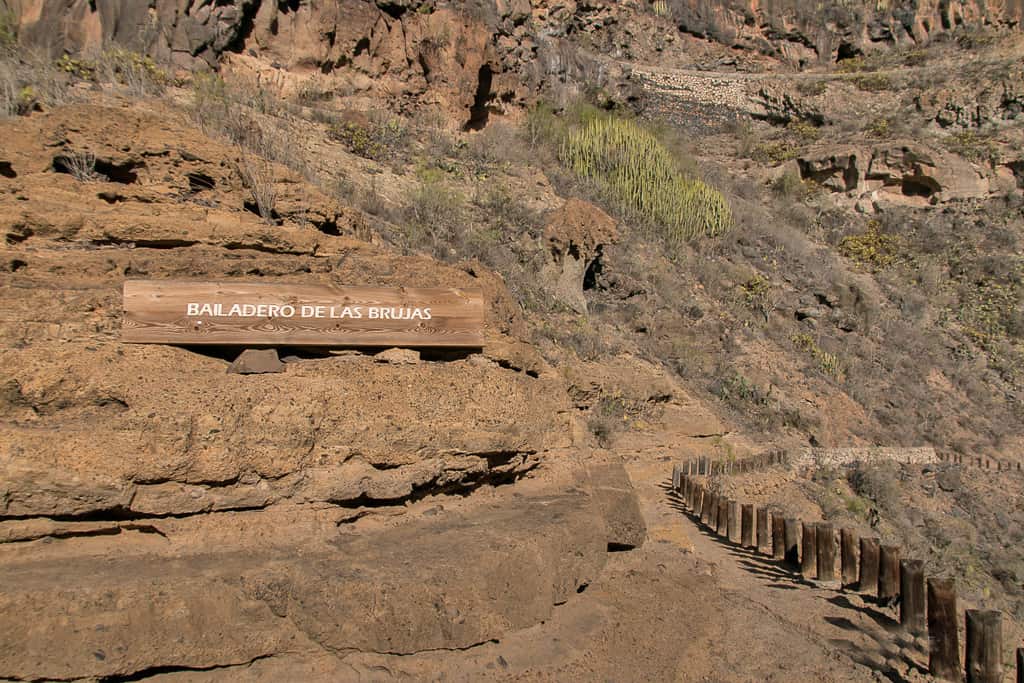
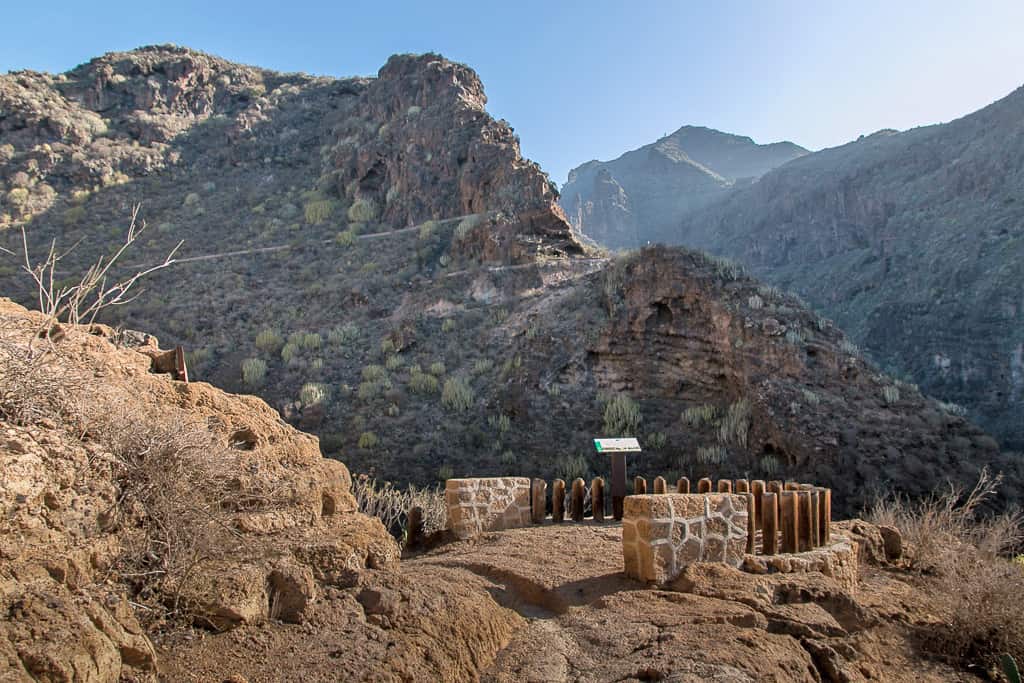
Very close to the village of Adeje, just at the beginning of the path that runs along the course of the Barranco del Infierno ravine, we come across a rocky structure on one of the bends in the path that invites us to rest, with some staggered floors on which we can sit, and which are situated under the watchful eye of a basalt rock that stands out to indicate that we are in a striking place from which we can appreciate an extraordinary panoramic view of the south of Tenerife.
There are many place names in the Islands with this name, and some of them are specified as Bailadero de las Brujas, which is interpreted as places where witches used to dance. Although the motivation comes from a practice of the aborigines: “When the storms did not come, and for lack of water there was no grass for the cattle, they gathered the sheep in certain places that were dedicated to that purpose, which they called the dance of the sheep, and driving a stick or spear into the ground, they separated the young from the sheep and made the mothers stand around the spear bleating, and with this ceremony the natives understood that God was appeased and heard the bleating of the sheep and provided them with rain”. Alonso de Espinosa at the end of the 16th century. The term Baladero in Canarian toponymy derives by popular etymology from the Guanche baladeros.
The Bailadero, which possibly had its origin in the aboriginal custom, could be a spiritual or ceremonial place that, after the conquest, would be rejected and persecuted by the new religious doctrine, hence all acts that were outside of this and were considered as witchcraft and were persecuted.